Granular, powdered, and pellet activated carbon are not interchangeable. The right form depends on how the carbon contacts the water, liquid, or gas, and how it will be retained, replaced, or separated. Buyers should choose the form around the equipment first, then compare specifications and price.
Quick Buying Logic
| Form | Best Starting Point | Main Limitation |
|---|---|---|
| Granular activated carbon | Fixed beds, water filters, process liquid polishing | Needs correct particle size and bed design |
| Powdered activated carbon | Dosing, batch treatment, decolorization, emergency use | Must be separated after contact |
| Pellet activated carbon | Gas-phase adsorption, VOC systems, airflow-sensitive beds | Usually not the first choice for liquid dosing |
Granular Activated Carbon
Granular activated carbon is usually chosen when carbon needs to stay in a vessel or filter while water or liquid flows through it. The buyer should focus on particle size, pressure drop, bed depth, hardness, backwash behavior, and replacement interval.
Granular carbon is often practical for continuous treatment because it is easier to retain than powder and can be replaced as a bed.
[[product:granular]]
Powdered Activated Carbon
Powdered activated carbon is used when fast contact is needed or when the process is based on dosing. It can be useful for decolorization, odor response, emergency treatment, or batch processes.
The tradeoff is separation. After powdered carbon contacts the liquid, the system must remove it by filtration, settling, or another separation step. A powder that adsorbs well but filters slowly can still be a poor purchase.
[[product:powdered]]
Pellet Activated Carbon
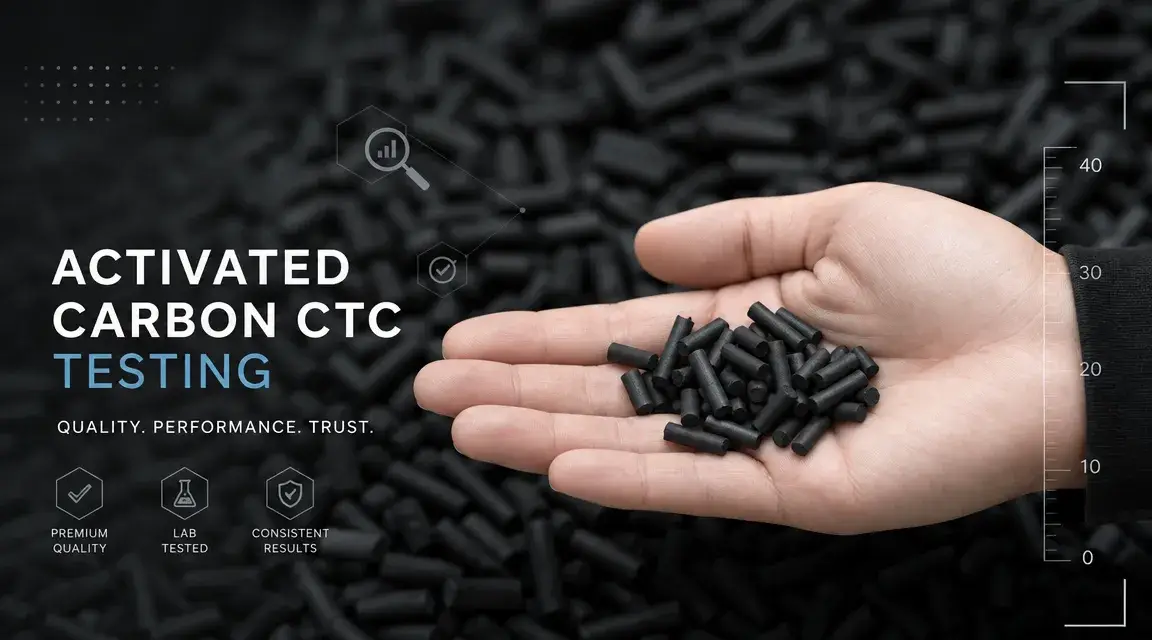
Pellet activated carbon is common in gas-phase adsorption systems because the uniform shape can support predictable airflow and pressure drop. It is often considered for VOC treatment, odor control, and some air purification systems.
For gas projects, buyers should think about CTC value, pellet diameter, moisture, hardness, airflow, humidity, and replacement method.
[[product:pellet]]
Let the Equipment Decide First
Do not start by asking which form is “best.” Ask how the carbon will be used:
- Will it sit in a fixed bed?
- Will it be dosed into a tank?
- Will gas flow through it?
- Does the process need low pressure drop?
- How will spent carbon be removed?
- Is dust or filtration speed a problem?
For water treatment, see How to Choose Activated Carbon for Water Treatment Projects. For VOC treatment, see Activated Carbon for VOC Removal: Buyer’s Selection Guide.
Get a Form-Based Recommendation
When asking Tanjin Carbon for a recommendation, send the application, equipment type, liquid or gas flow, target problem, preferred form if known, quantity, packaging, and destination. If the form is unclear, we can compare granular, powdered, and pellet options before quoting.
Interested in Our Products?
Leave us a message and we'll get back to you within 24 hours.