- Where Food Grade Activated Carbon Is Used
- Why Activated Carbon Works in Food Liquids
- Choosing the Right Food Grade Activated Carbon
- Specifications That Matter More Than a Single Number
- Do Not Treat General Industrial Carbon as a Food Grade
- Procurement Details to Clarify Before Quotation
- Useful Questions Before Buying
- Get a Food Grade Activated Carbon Recommendation
- References
When a syrup, beverage ingredient, edible oil, or fermentation liquid still carries color, odor, or taste after normal processing, food grade activated carbon is often considered. The wrong grade can remove some color but slow filtration, shift pH, or create residue problems in the finished stream.
The key question is not simply whether the carbon is “high grade.” The grade must match the liquid, target impurity, contact method, filtration system, and document requirements of the plant.
This guide explains how activated carbon works in food liquids, which carbon types are commonly used, which specifications matter, and what information helps Tanjin Carbon recommend a practical starting grade.
Where Food Grade Activated Carbon Is Used
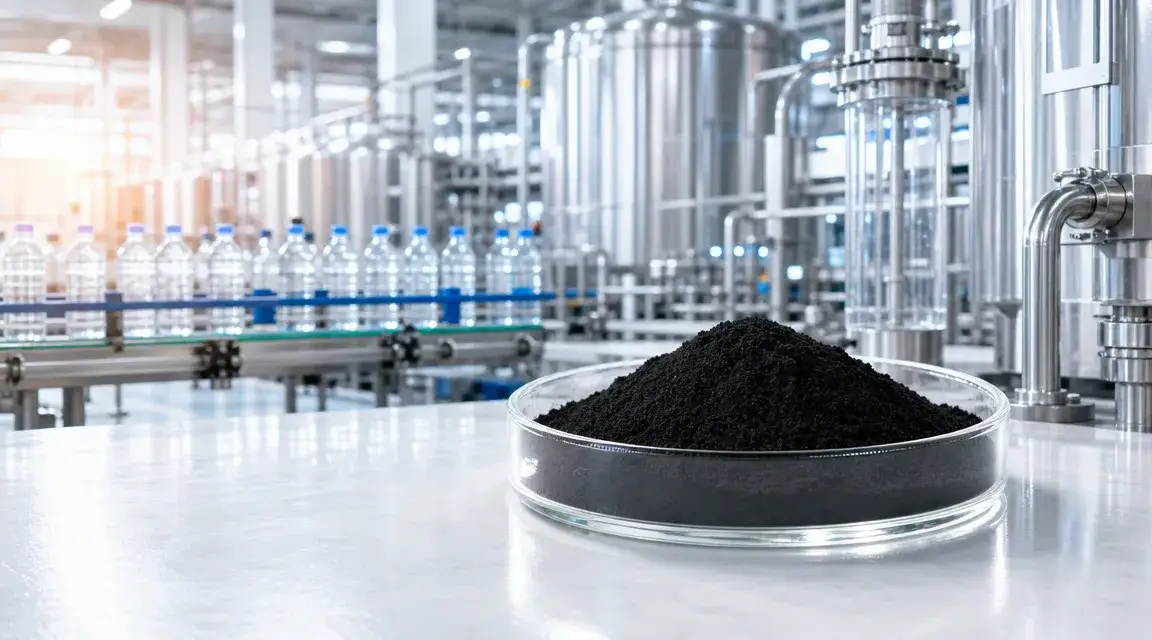
In food and beverage plants, activated carbon is mainly used for decolorization, deodorization, taste correction, polishing, and trace organic removal. The treated liquid may be clear, dark, viscous, acidic, oily, alcoholic, or sensitive to odor.
| Application | Main Buying Concern |
|---|---|
| Sugar syrup, glucose, fructose, glycerin, sorbitol | Color reduction, dosage, filtration speed, ash, pH |
| Beverage, juice, concentrate, alcohol-related streams | Odor, taste, color, residue, process compatibility |
| Edible oil or oily ingredient streams | Color bodies, oxidized compounds, viscosity, filtration loss |
| Organic acid or fermentation liquids | Decolorization, pH behavior, soluble impurities, batch consistency |
| Food process water | Taste, odor, chlorine-related compounds, fixed-bed service life |
These applications cannot all use the same grade. Sugar syrup may need strong color removal and acceptable filtration speed. A beverage ingredient may be more sensitive to taste and odor. Process water may need a granular fixed-bed carbon instead of a powdered carbon dosed into a batch tank.
Why Activated Carbon Works in Food Liquids
Activated carbon removes many food-process impurities by adsorption. It is not only filtering visible particles. It is giving dissolved organic molecules a large internal surface where they can be held.
In a food liquid, the process is easier to picture like this:
- Color bodies move from the liquid into the carbon pore system.
- Odor and taste compounds attach to internal carbon surfaces.
- Larger molecules need access pores and mesopores, not only very small micropores.
- Powdered carbon gives fast contact in batch dosing, but it must be filtered out cleanly.
- Granular carbon works better when the liquid flows through a fixed bed over time.
This is why a single number such as iodine value cannot describe the whole result. Pore structure, surface chemistry, ash, pH, particle size, contact time, and filtration behavior all affect the treated product.
Adsorption is also not unlimited. Once the available sites are filled, color or odor begins to pass through, or the batch needs more dosage to reach the same result. High viscosity, poor mixing, oil fouling, short contact time, or slow filtration can make a good carbon perform poorly in production.
Choosing the Right Food Grade Activated Carbon
The best starting grade depends on whether the plant is dosing carbon into a liquid, running a fixed-bed polishing system, or treating a sensitive high-purity stream. Product cards are useful for navigation, but the first decision should come from process fit.
| Carbon Option | When It Is a Good Starting Point |
|---|---|
| Wood-based powdered activated carbon | Syrup, sweetener, juice, organic acid, or ingredient decolorization where larger color bodies and filtration behavior matter |
| Washed or acid-washed activated carbon | Sensitive food liquids where ash, pH shift, soluble minerals, odor, taste, or trace metals are real concerns |
| Granular activated carbon | Food process water or continuous polishing systems where fixed-bed operation and service life matter |
| Food-grade powdered carbon | Batch treatment where fast contact, controlled dosage, and downstream filtration are available |
Wood-based activated carbon is often a strong starting point when the main job is liquid decolorization. It is especially relevant for sugar, sweetener, beverage ingredient, organic acid, and similar streams where larger color bodies must be adsorbed and the plant can use powder dosing followed by filtration.
[[product:woodBased]]
Washed activated carbon is useful when ash, pH, soluble minerals, odor, taste, or trace metals must be controlled more tightly. It is not automatically required for every food project, but it should be considered for higher-purity food liquids, beverage ingredients, and process water where soluble residue is a real concern.
[[product:washed]]
Granular activated carbon can be suitable for process water or continuous polishing, while powdered carbon is often more practical for batch decolorization. The process design decides which form is easier to use.
Specifications That Matter More Than a Single Number
Food-grade carbon selection should not be based on iodine number alone. Iodine number can indicate micropore adsorption, but many food decolorization tasks depend on larger organic molecules, filtration behavior, and purity control.
| Specification | Why It Matters |
|---|---|
| Methylene blue value | Often more useful for color-related molecules than iodine number alone |
| Ash content | Affects purity, soluble residue, taste risk, and downstream quality expectations |
| pH | Important when the liquid is flavor-sensitive, acid-sensitive, or tightly controlled |
| Particle size | Controls contact speed, dust, filtration speed, and carbon carryover risk |
| Odor and taste | Critical for beverage, sweetener, alcohol, and ingredient applications |
| Moisture | Affects handling, dosage calculation, and shipping weight |
For decolorization work, a practical test often matters more than a paper comparison. Test dosage, contact time, color reduction, filtration speed, pH change, odor, taste, and residue behavior using the real liquid.
For more detail on decolorization parameters, see Methylene Blue Value vs Iodine Number in Activated Carbon.
If you are not sure whether your process needs wood-based powdered carbon, washed carbon, or granular carbon, send your liquid type and target color for a starting grade recommendation. A short process description is usually more useful than asking only for the highest iodine value.
Do Not Treat General Industrial Carbon as a Food Grade
General industrial activated carbon may work very well in wastewater, air treatment, solvent recovery, or chemical purification. That does not mean it should be used in a food-related liquid.
Food and beverage applications need closer attention to raw material, ash, pH, odor, taste, soluble impurities, heavy metals, packaging cleanliness, and required documents. The point is process risk: the wrong grade can remove color but still create filtration loss, taste impact, residue problems, or audit delays.
Procurement Details to Clarify Before Quotation
Before asking for a food grade activated carbon quote, prepare the process details that affect grade selection.
Liquid type and treatment target. Tell the supplier whether the liquid is syrup, juice, oil, alcohol-related liquid, ingredient solution, process water, or another stream. Also state whether the target is color, odor, taste, organic impurity, or final polishing.
Process conditions. pH, temperature, viscosity, concentration, contact time, mixing method, and filtration method change the practical grade choice.
Performance target. If possible, provide current color value, target color, dosage limit, filtration problem, odor issue, or replacement interval.
Purchase and delivery basis. Quantity, packaging, destination, required documents, and trial schedule help Tanjin Carbon recommend a realistic grade and quote.
Useful Questions Before Buying
Is powdered activated carbon always better for food processing?
No. Powdered carbon is often better for batch decolorization because it gives fast contact, but it must be removed by filtration. Granular carbon can be better for process water polishing or continuous fixed-bed systems.
Which parameter is most important for food decolorization?
For many liquid decolorization applications, methylene blue value, pore structure, ash, pH, and filtration behavior are more useful than iodine number alone. The real liquid should still be tested.
When should washed activated carbon be considered?
Consider washed or acid-washed carbon when the liquid is sensitive to ash, pH shift, soluble minerals, trace metals, odor, or taste. It is especially relevant for higher-purity food, beverage, ingredient, and process water applications.
Get a Food Grade Activated Carbon Recommendation
Food grade activated carbon should be selected around the liquid, impurity, process method, and filtration requirement. A grade that looks strong on one specification may not be the best choice if it filters slowly or changes the treated product.
For a practical starting grade and quotation basis, request a food grade activated carbon quote with your process details.
References
Interested in Our Products?
Leave us a message and we'll get back to you within 24 hours.