- The Main Specifications and What They Actually Tell You
- Iodine Number: Useful, but Not a Universal Quality Score
- CTC Value: More Relevant for Gas-Phase Adsorption
- Methylene Blue Value: Important for Decolorization Work
- Ash, pH, and Moisture: The Quiet Specifications That Change Real Use
- Hardness and Particle Size: Where Specifications Meet Equipment
- Bulk Density: Important for Filling, Freight, and Cost Comparison
- How to Compare Two Specification Sheets
- Common Specification Questions
- Need Help Matching Specifications to a Quote?
- References
Activated carbon specifications are useful only when they are read in the context of the application. A high iodine number, low ash content, or strong hardness value may be important in one project and secondary in another.
This guide explains the specifications buyers most often see in quotations, what each one can tell you, and where each number can mislead. The goal is not to chase the highest values, but to choose a grade that fits the process and can be quoted on a clear basis.
Before comparing numbers, define the application and the main failure risk: early breakthrough, high pressure drop, dust, color carryover, product contamination, or short replacement interval. That context decides which specifications deserve attention.
The Main Specifications and What They Actually Tell You
| Specification | What It Helps Buyers Judge | Where It Often Matters |
|---|---|---|
| Iodine number | Micropore adsorption reference | Water polishing, general grade comparison |
| CTC value | Gas-phase adsorption reference | VOC adsorption, solvent vapor control |
| Methylene blue value | Larger molecule and color adsorption tendency | Sugar, oil, dye, and process liquid decolorization |
| Ash content | Mineral residue and purity impact | Food, water, acid-washed grades, sensitive liquids |
| Moisture | Net usable product and handling behavior | Price comparison, storage, feeding, packaging |
| Hardness / abrasion | Resistance to breakage and fines | Fixed beds, VOC systems, gold recovery |
| Particle size / mesh | Pressure drop, dosing, filtration, and equipment fit | GAC filters, PAC dosing, gas adsorbers |
| pH | Compatibility with the treated liquid | Food, water, chemical process liquids |
| Bulk density | Filling volume and logistics planning | Filter vessel loading, container loading, cost comparison |
| Application fit | Whether the specification matches the real process | Every purchase |
The table is a starting point. The purchasing decision comes from knowing which two or three specifications control performance in your system.
Iodine Number: Useful, but Not a Universal Quality Score
Iodine number is commonly used as a reference for micropore adsorption, especially when buyers compare general water treatment or polishing grades. ASTM D4607 is one recognized test method, which is why the value appears so often on specification sheets.
The mistake is treating iodine number as the whole quality score. If the target is color bodies, oils, larger organic molecules, or gas-phase vapor, pore structure, CTC value, methylene blue value, pressure drop, or trial performance may matter more. Use iodine number to compare similar products in similar applications, not unrelated grades.
CTC Value: More Relevant for Gas-Phase Adsorption
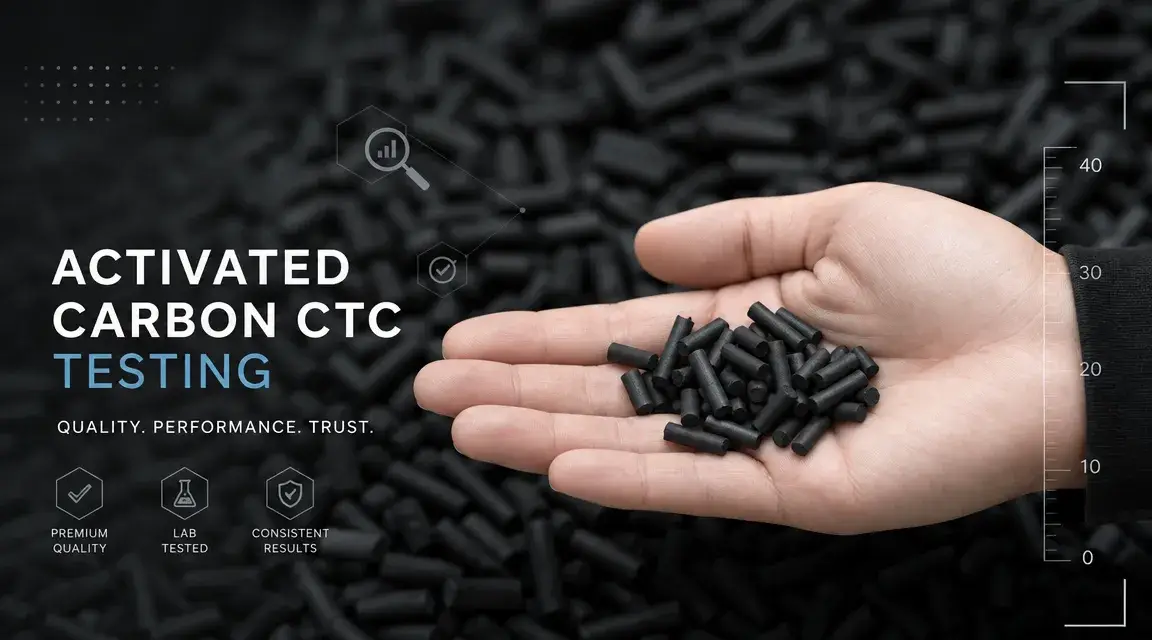
CTC value is more relevant for vapor and gas-phase applications, including VOC removal, solvent vapor control, and air purification. ASTM D3467 is one recognized method related to carbon tetrachloride activity.
For a real VOC project, CTC still has to be read with system data. The U.S. EPA notes that activated carbon adsorber performance is influenced by gas flow rate, inlet concentration, pressure differential, moisture, and operating conditions. A high CTC value cannot compensate for an undersized adsorber, excessive humidity, or the wrong pellet size.
[[product:pellet]]
Methylene Blue Value: Important for Decolorization Work
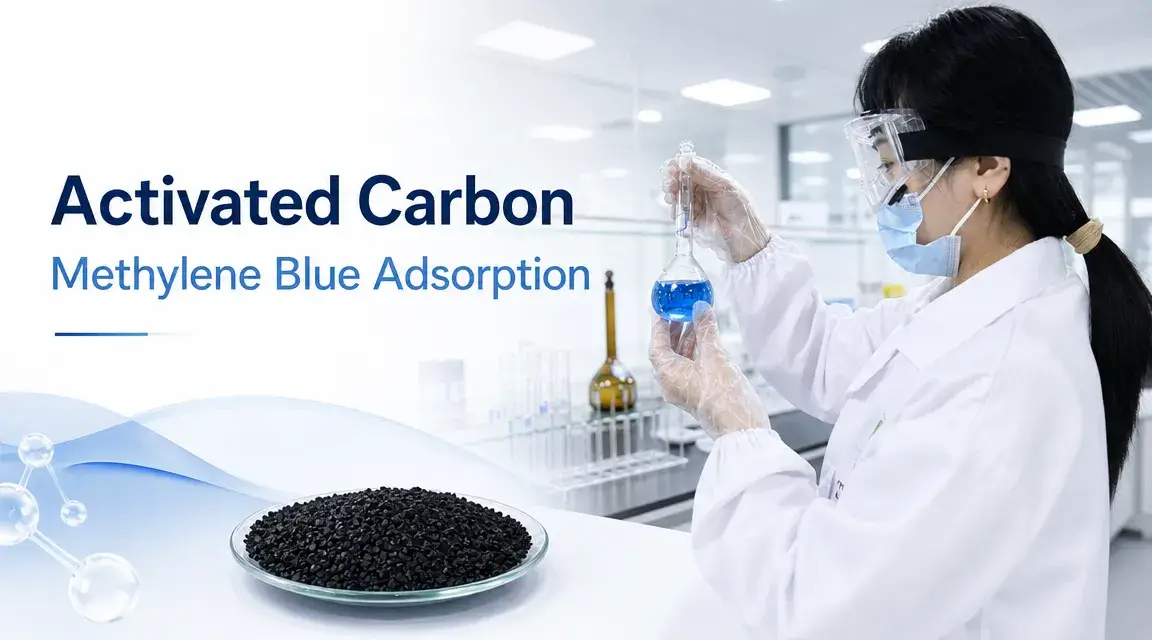
Methylene blue value is more useful when the purchase is about decolorization or larger molecules. Sugar liquor, edible oil, dye wastewater, and some process liquids may not be judged well by iodine number alone.
For these applications, dosage, contact time, temperature, filtration rate, pH, and the type of color body can all change the result. If the goal is color reduction, ask for a grade intended for decolorization and test it under process conditions.
[[product:woodBased]]
Ash, pH, and Moisture: The Quiet Specifications That Change Real Use
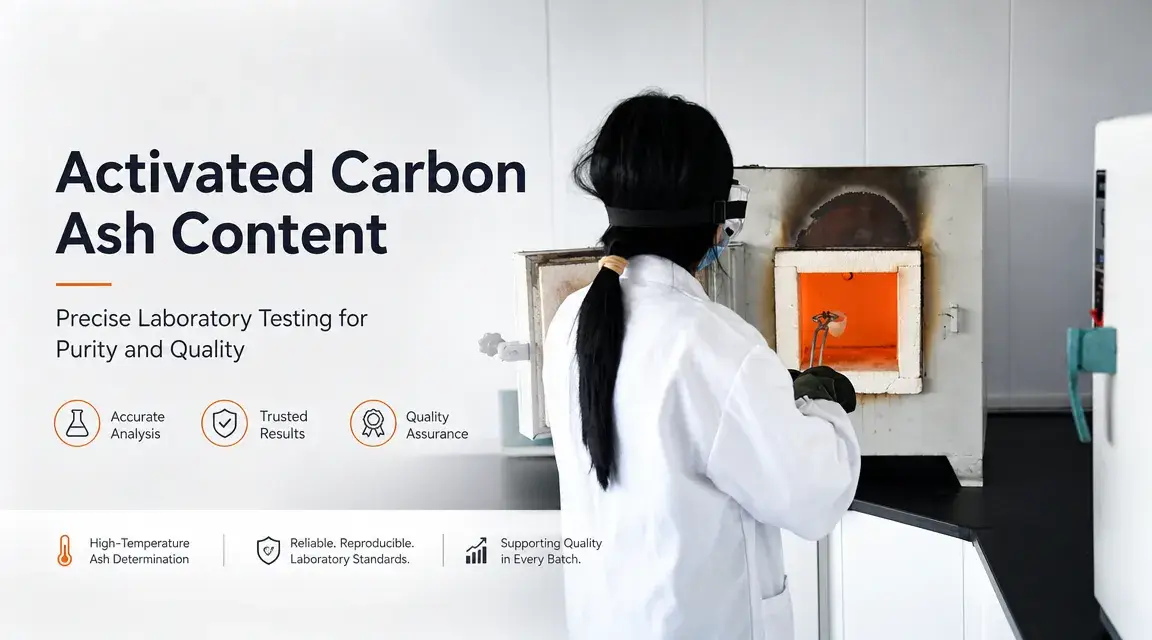
Ash content is the mineral residue left after carbon is burned under test conditions. It can affect purity, taste, pH behavior, and usable carbon fraction. For drinking water, food, beverage, and sensitive liquids, lower ash or washed grades may be worth considering.
pH matters when carbon contacts process liquids. A grade acceptable for wastewater polishing may not fit a food, beverage, or pharmaceutical-related process if it shifts pH outside the acceptable range.
Moisture affects handling and price comparison. If two offers are priced per ton and one carries more moisture, the buyer may be paying for more water and less usable carbon.
Hardness and Particle Size: Where Specifications Meet Equipment
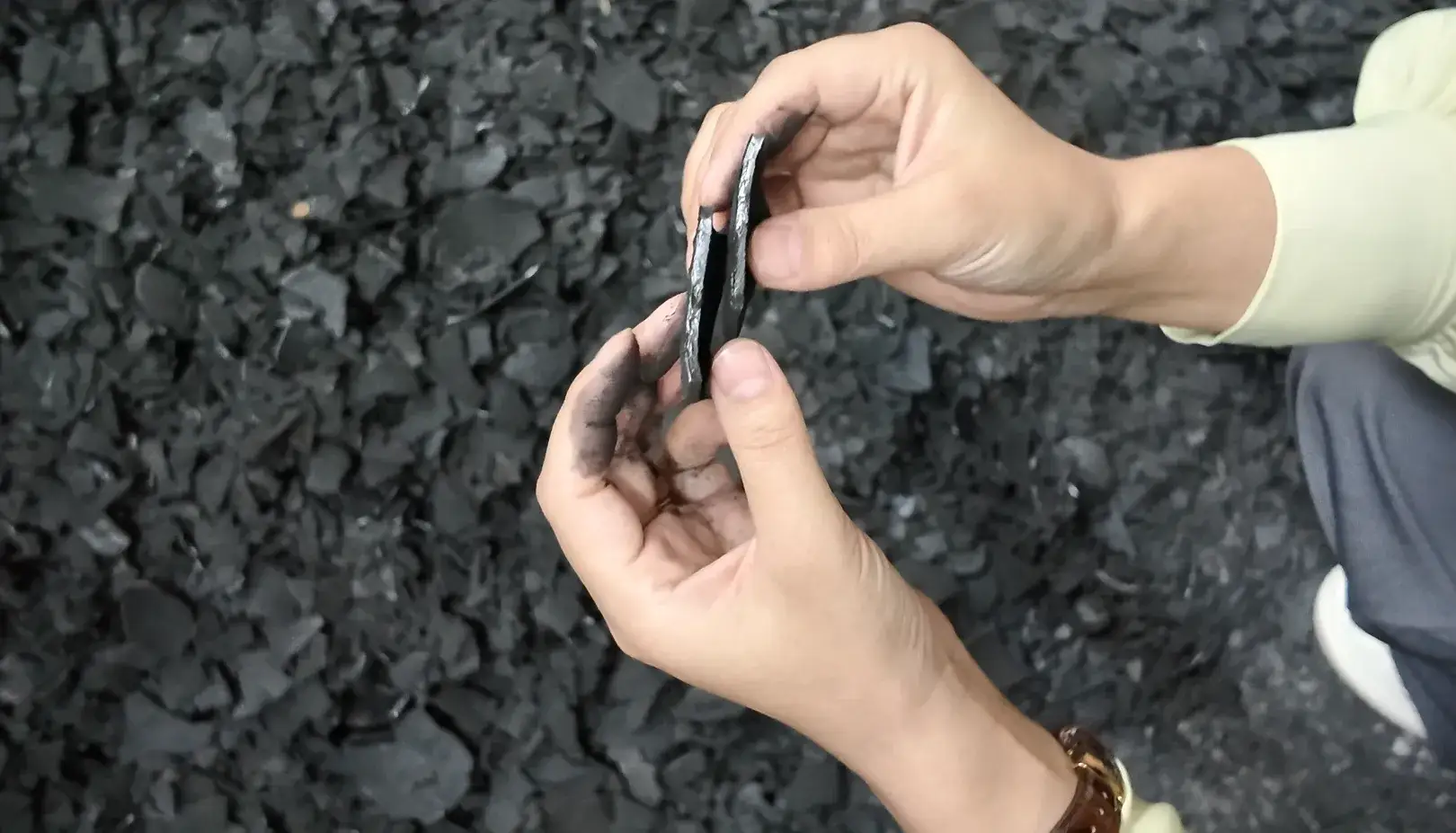
Hardness matters whenever carbon is used in a bed, vessel, column, adsorber, or gold recovery circuit. Weak carbon can generate fines, increase pressure drop, shorten bed life, and create cleanup problems.
Particle size is just as practical. Granular carbon must match vessel design and pressure drop limits; powdered carbon must suit dosing and filtration; pellet carbon must match gas velocity and bed depth. Two products with similar iodine number can perform very differently if one breaks easily or has the wrong size.
[[product:granular]]
Bulk Density: Important for Filling, Freight, and Cost Comparison
Bulk density helps buyers estimate how much carbon is needed to fill a vessel and how much product fits into bags, drums, pallets, or containers. A lower-density carbon may look attractive by price per ton but require more volume for the same mass. A higher-density carbon may load differently in a vessel and change freight efficiency.
For projects with fixed filter dimensions, ask for both weight requirement and volume requirement. If the vessel needs a certain bed depth, bulk density becomes part of the cost calculation. For importers and distributors, it also affects container loading and warehouse planning.
How to Compare Two Specification Sheets
Do not compare specification sheets in isolation. First make sure the offers are for the same type of activated carbon and the same application. A water treatment GAC, a powdered decolorization carbon, and a gas-phase pellet carbon should not be compared as if they were interchangeable.
After the application and product form are clear, compare particle size, key adsorption value, ash, moisture, hardness, pH, packing, and delivery basis. If these fields are different, the lower price may simply reflect a different product, not a better offer.
For quotation preparation, read What Information Should You Provide to Get an Accurate Activated Carbon Quote?. If price is the concern, compare the logic in How Much Does Activated Carbon Cost per Ton?.
[[cta:help]]
Common Specification Questions
Is a higher iodine number always better?
No. A higher iodine number can indicate stronger micropore adsorption, but it does not guarantee better performance for large molecules, decolorization, gas-phase adsorption, or systems limited by pressure drop. It should be read with application, particle size, ash, hardness, and actual use conditions.
Which specification matters most for VOC removal?
CTC value is often more relevant than iodine number for gas-phase adsorption, but system conditions matter. Airflow, humidity, inlet concentration, temperature, bed depth, and pressure drop can decide whether the carbon works well in the real adsorber.
Which specifications should be checked for gold recovery carbon?
Gold recovery buyers usually pay close attention to hardness, attrition resistance, particle size, ash, adsorption behavior, and batch consistency. The carbon must survive movement through the circuit without breaking down into excessive fines.
Need Help Matching Specifications to a Quote?
If you already have a target specification, send the application, product form, quantity, packaging, and destination. If the specification is not clear yet, share the treatment goal, equipment type, and any current grade you are using.
Tanjin Carbon can help review which parameters matter for the project, recommend a practical grade, and prepare a factory-direct quotation with export packaging and global shipping support. For a faster reply, get a quote with the target specification or the application details.
References
- ASTM D4607 - Standard Test Method for Determination of Iodine Number of Activated Carbon
- ASTM D3467 - Standard Test Method for Carbon Tetrachloride Activity of Activated Carbon
- ASTM D2866 - Standard Test Method for Total Ash Content of Activated Carbon
- ASTM D3802 - Standard Test Method for Ball-Pan Hardness of Activated Carbon
- EPA - Monitoring by Control Technique: Activated Carbon Adsorber
Interested in Our Products?
Leave us a message and we'll get back to you within 24 hours.