- Why a Per-Ton Price Can Be Misleading
- The 7 Pricing Factors Buyers Should Check
- 1. Raw Material: Coconut Shell, Coal-Based, or Wood-Based
- 2. Product Form Changes Production and Use
- 3. Specification Level: Higher Numbers Usually Cost More, but Not Always Better
- 4. Particle Size and Mesh Affect Yield and Equipment Fit
- 5. Washing, Acid Washing, Impregnation, and Dedusting Add Cost
- 6. Packaging, Pallets, and Loading Can Change the Real Price
- 7. Freight, Destination, and Delivery Terms Decide Landed Cost
- What Information Gets You a More Accurate Quote?
- Common Price Questions
- Compare the Real Delivered Cost
- References
Activated carbon price per ton is not a single market number. The same inquiry can produce very different quotes depending on raw material, product form, target specification, particle size, treatment process, packaging, quantity, destination, and delivery term.
This article explains the main factors that change an activated carbon quote, so you can compare offers on the same basis and avoid choosing a product that looks cheaper only because key details are missing.
Why a Per-Ton Price Can Be Misleading
Many buyers ask, “What is your activated carbon price per ton?” It is a reasonable question, but it is not enough for a fair comparison. One supplier may quote a standard coal-based granular activated carbon in jumbo bags on FOB terms. Another may quote coconut shell granular activated carbon in 25 kg bags with palletizing and CIF freight included. The per-ton number may look close, but the products and commercial terms are not the same.
Before comparing prices, confirm four things:
- the product type and raw material;
- the key specifications and particle size;
- the packaging and loading method;
- the delivery term and destination.
If one of these is missing, the price may be incomplete.
[[cta:quote]]
The 7 Pricing Factors Buyers Should Check
| Pricing Factor | What It Changes in the Quote |
|---|---|
| Raw material | Coconut shell, coal, and wood have different cost structures and application strengths |
| Product form | Granular, powdered, pellet, washed, and impregnated grades require different processing |
| Specification level | Higher or tighter performance targets can reduce yield and increase production cost |
| Particle size | Screening, grinding, extrusion, and fines control affect usable yield |
| Additional treatment | Washing, acid washing, impregnation, and dedusting add process steps |
| Packaging and loading | 25 kg bags, jumbo bags, pallets, labels, and container loading change cost |
| Freight and delivery term | FOB, CFR, CIF, and destination details affect the landed cost |
This table is only a map. The real buying decision comes from understanding which factors apply to your project.
1. Raw Material: Coconut Shell, Coal-Based, or Wood-Based
Raw material is usually the first reason prices differ. Coconut shell activated carbon is often valued for hardness and micropore structure. Coal-based activated carbon is widely used in industrial water, wastewater, and gas treatment. Wood-based activated carbon is often considered for powdered grades and decolorization work.
The cheapest raw material is not automatically the lowest-cost choice. If the carbon fails early, creates fines, or needs much higher dosage, the per-ton saving can disappear quickly.
[[product:coalBased]]
2. Product Form Changes Production and Use
Granular, powdered, and pellet activated carbon are not priced the same because they are made and used differently. Granular activated carbon must match fixed beds and filters; powdered activated carbon is often used for dosing or decolorization; pellet activated carbon is common in gas-phase systems.
Specialty grades can change the price again. Washed carbon, impregnated carbon, and gold recovery carbon involve different processing or performance priorities. If the application is unclear, the quote may be for a product form that is easy to sell rather than the one your system needs.
3. Specification Level: Higher Numbers Usually Cost More, but Not Always Better
Specification level affects price because tighter targets can require more controlled activation, lower yield, additional screening, or closer quality control. Higher iodine number, higher CTC value, lower ash, tighter moisture, or stronger hardness can all change cost.
But higher is not always better. For water treatment, particle size and service life may matter as much as iodine number. For VOC treatment, CTC value and pressure drop may matter more. For decolorization, dosage and filtration behavior can decide the real cost.
For more detail, read 10 Activated Carbon Specifications Every Industrial Buyer Should Check.
4. Particle Size and Mesh Affect Yield and Equipment Fit
Particle size can change both production cost and operating cost. Tight size control may require more screening and generate more off-size material. Fine powder needs grinding and dust control; pellet carbon requires extrusion and drying.
The wrong size creates hidden costs. Too fine a granular carbon may increase pressure drop; too coarse a grade may reduce contact efficiency; a powder that filters poorly can slow production. A quote should state the size clearly.
5. Washing, Acid Washing, Impregnation, and Dedusting Add Cost
Additional treatment is sometimes necessary, but it should not be requested automatically. Washing or acid washing can help when ash, pH, soluble minerals, or purity need closer control. Impregnation can be useful for specific gas contaminants, and dedusting can matter when clean handling is important.
If the application does not require these treatments, they may add cost without improving the result. If the application does require them, a cheaper untreated grade may create bigger problems later.
[[product:washed]]
6. Packaging, Pallets, and Loading Can Change the Real Price
Packaging is not just a warehouse detail. It affects labor, loading quantity, container utilization, moisture protection, and unloading at the buyer’s site.
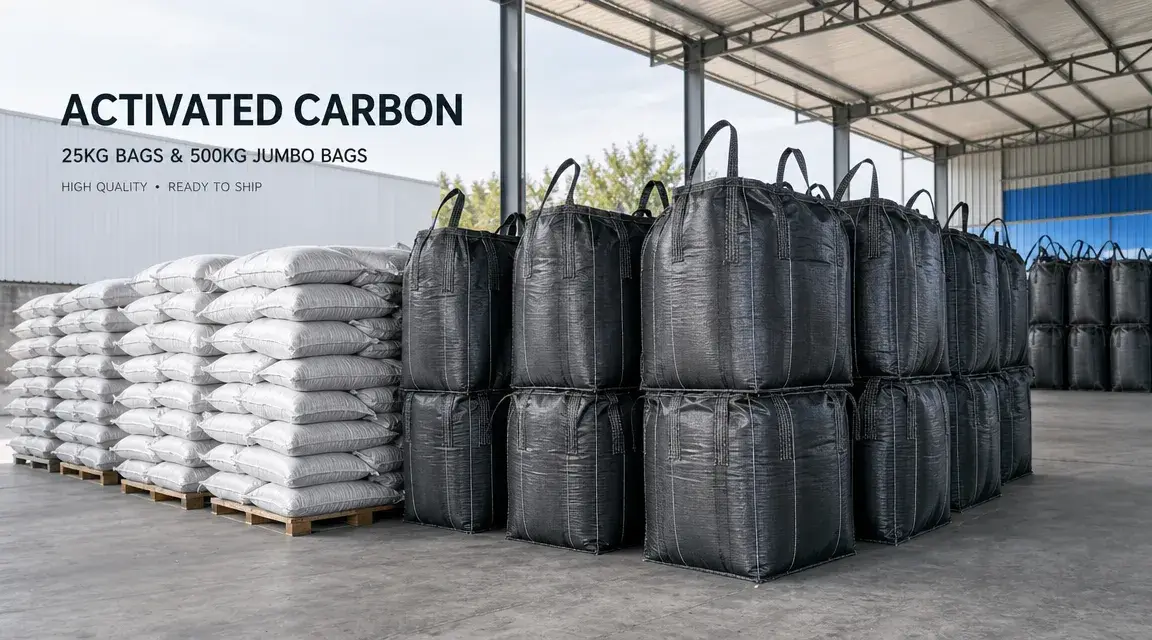
Common options include 25 kg bags, 500 kg or 1000 kg jumbo bags, palletized bags, non-palletized loading, and custom labeling. Smaller bags are easier to handle but add cost. Jumbo bags reduce handling cost but require lifting equipment. Pallets improve unloading but reduce container loading weight.
If two suppliers quote different packing methods, the per-ton price is not directly comparable. For a packaging-focused decision, read Activated Carbon Packaging Options: 25kg Bags, Jumbo Bags, and Pallets.
7. Freight, Destination, and Delivery Terms Decide Landed Cost
A factory price and a landed cost are not the same. FOB, CFR, CIF, and other delivery terms allocate cost and responsibility differently. Buyers should confirm the named port, insurance responsibility, and destination details.
Freight changes with route, season, container availability, loading weight, pallet requirement, and destination port. A product that looks cheaper at factory level may become less attractive after packing and freight are included.
What Information Gets You a More Accurate Quote?
The fastest way to receive a useful activated carbon quote is to send enough commercial and technical information at the beginning.
Include:
- application or industry;
- preferred product form if known;
- target specification or previous grade if available;
- particle size or mesh requirement;
- order quantity or trial quantity;
- packaging preference;
- pallet or non-pallet requirement;
- destination port or delivery address;
- requested delivery term;
- expected purchase timing.
If you are not sure which grade to request, say that clearly. Tanjin Carbon can suggest a practical starting grade before preparing the quotation, including product form, packaging, and shipment basis. When the basic details are ready, get a project quote.
Common Price Questions
Why are activated carbon quotes from different suppliers so far apart?
Usually because the offers are not for the same product, same size, same packaging, same quantity, or same delivery term. Raw material, specification level, washing, freight, and container loading can all change the final price.
Should I buy the cheapest activated carbon if the iodine number is similar?
Not without checking the application fit. Similar iodine number does not guarantee similar ash, hardness, particle size, moisture, pore structure, pressure drop, or service life. The cheaper product may still be suitable, but it should be compared on more than one number.
Can Tanjin Carbon provide a current price list?
For industrial purchasing, a project quote is usually more useful than a general price list. Send the product type, quantity, packaging, destination, and delivery term, and Tanjin Carbon can prepare a quote based on the actual requirement.
Compare the Real Delivered Cost
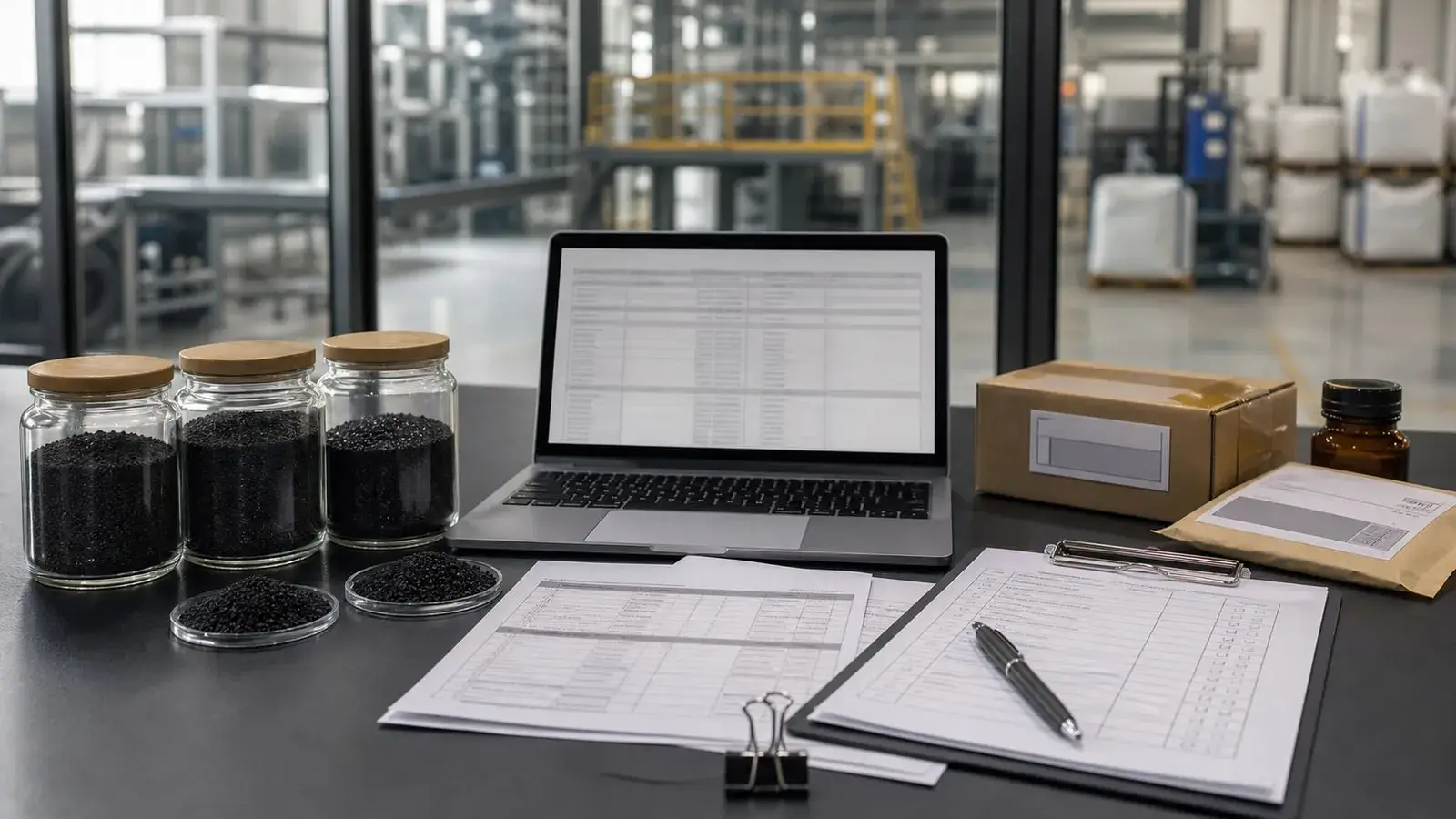
Create a simple comparison sheet with product type, raw material, key specifications, particle size, packaging, quantity, delivery term, destination, and payment terms. Only compare price after these fields are aligned. If one supplier quotes 25 kg palletized bags CIF and another quotes jumbo bags FOB, ask both to re-quote on the same basis.
The goal is not to buy the lowest number on the page. The goal is to buy a grade that works in your process, arrives in the packing you can handle, and gives a predictable cost per treated unit.
If you are comparing activated carbon prices, Tanjin Carbon can quote on the same basis as your current offers and help you check whether the grade, packing, and delivery term are truly comparable. For factory-direct pricing, stable supply, and export shipment support, request a comparable quote with the product type, quantity, packing, destination, and delivery term.
References
Interested in Our Products?
Leave us a message and we'll get back to you within 24 hours.